Commentary
When does a Feed Become a Forum?
The Question Left Unanswered in Lindke v. Freed
By Shahana Polselli
November 3, 2026
Imagine your city’s mayor invites residents to his home every Saturday morning to discuss local government. People gather in the living room to complain about road construction, ask questions about zoning, and debate the city’s budget. The mayor listens, responds, and occasionally announces upcoming municipal initiatives. After several months, he begins throwing out anyone who criticizes him. Eventually, he bars one resident from returning altogether.
Has the mayor violated the First Amendment? At first glance, the answer seems obvious: No! After all, it is his house. His private property. But the more you think about it, the harder the question becomes.
The meeting concerns government business. The public was invited. Citizens were encouraged to participate. Government officials attended. Public policy was discussed. The mayor intentionally created a place where constituents could engage directly with their government. At some point, does the fact that the meeting occurs inside a private home stop mattering?
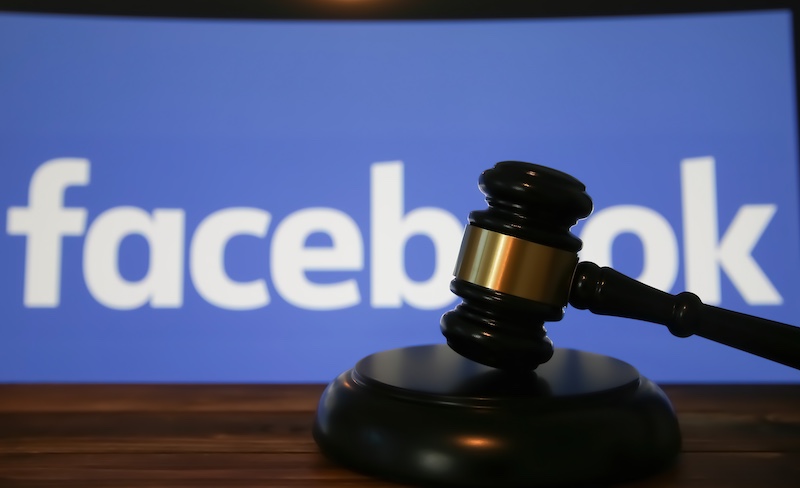
Now, imagine if instead of a living room, the invitation was to a private Facebook page. This is not a hypothetical. It is the precise fact pattern at the center of Lindke v. Freed, decided by the Supreme Court on March 15, 2024. The Court unanimously decided that a two-part test should determine whether Freed was acting as a government official (a state actor) or as a private citizen when posting about government business on his private Facebook page. While focused on the “who,” the Court never reached the question of the “where.” Does a private social media page become a “limited public forum” when constituents are invited there to engage with government officials?
This question matters. If the answer is yes, the page owner cannot discriminate based upon viewpoint and must narrowly tailor any restrictions. In other words, deleting a comment you disagree with on your personal social media page might violate the First Amendment if you are a government official and opened the door to the public.

The Case Everyone Thinks Was About State Action
When the Supreme Court decided Lindke v. Freed in 2024, most headlines framed the case as a dispute over whether government officials may block critics on social media acting in their government capacity. That description is only partially correct.
James Freed, the city manager of Port Huron, Michigan, maintained a personal Facebook page he had created years before entering public service. After becoming city manager, he made his posts public and occasionally used the page to share information about city affairs alongside photographs of his family, Bible verses, and updates about everyday life. When resident Kevin Lindke repeatedly criticized the city’s pandemic response in the comments, Freed eventually deleted the comments and blocked him.
Many observers assumed the Supreme Court would answer whether Freed’s Facebook page had become a public forum where citizens possessed First Amendment rights. It did not. Instead, the Court focused on whether a public official is actually acting as the government, even if his comments are on a personal page.
Justice Amy Coney Barrett, writing for a unanimous Court, held that a public official acts under color of state law only when two conditions are satisfied. First, the official must possess actual governmental authority over the subject being discussed. If a city manager posts about a public health issue but public health is not within his portfolio, the deletion of critical comments about that post cannot be state action—because he had no state authority over public health to exercise in the first place. Second, the official must purport to exercise that authority through the challenged social media activity, not merely express an opinion or share information. If a place is “mixed use”—part private information and part official public information—the Court must conduct a meeting-by-meeting (post by post) analysis.
That framework resolved the threshold issue of ‘state action.’ For the Constitution’s speech protections to apply, there must be action by the state—meaning action by a government, a government official, or someone exercising genuine governmental power. No state action, no constitutional claim. But once state action exists, another constitutional question immediately follows—one the Court didn’t answer.
The Question Left Unanswered
While the Court discussed the question of “who” was acting, it failed to address “where” the action was occurring. Once we knew the city manager was acting in an official capacity, what constitutional rules govern the page? Is it a public forum? The Court said almost nothing—a surprising omission because public forum doctrine has occupied the Supreme Court for more than forty years.
At its core, the “public forum” doctrine is about when and where the government must tolerate private speech and when it can restrict it. The First Amendment protects freedom of speech—but only against government censorship. It does not give individuals the right to say whatever they want, wherever they want. It does not allow you to walk into a person’s living room and criticize them. The Constitution does, however, limit the government’s ability to restrict speech in certain places—and the type of place determines how much protection the speaker gets. For example, one cannot deliver a political speech in a courtroom during a trial or paste flyers inside a police station. If the government chooses to open a space for public discourse, it might have limitations on what speech it can censor.
Beginning with Perry Education Assn. v. Perry Local Educators’ Assn, the Court developed a framework for determining when the government must tolerate speech on property it controls. Traditional public forums—parks, sidewalks, and streets—receive the greatest constitutional protection. The government cannot restrict speech based on its content or viewpoint. It can impose ‘time, place, and manner’ rules—requiring a permit for a large march, for instance, or prohibiting amplified sound after midnight—but those rules must be content-neutral and leave open alternative channels for expression. This means a city cannot ban political protests in a public park simply because it dislikes the message.
Designated public forums are different. These are places the government voluntarily opens for public discussion, even though it had no obligation to do so. Once opened, however, the government generally cannot discriminate against speakers because of their viewpoint. In other words, the government can say no to political speeches in a designated public forum, but it cannot say yes to one political party and no to another.
The key question is intent. Did the government intentionally create a place for public expression? That principle was reinforced two years later in Cornelius v. NAACP Legal Defense and Educational Fund, where the Court explained that forum status depends primarily on whether the government intended to open property for expressive activity.
Those cases were written decades before Facebook existed. Yet they may provide the roadmap for answering the question Lindke left behind.
A private entity retains editorial discretion over speech occurring on its property.
Can a Facebook Comment Section Become a Public Forum?
The instinctive response is often yes. After all, Facebook feels like a public square. The Supreme Court acknowledged as much in Packingham v. North Carolina, describing social media as “the modern public square” and recognizing that online platforms have become central places for political discussion and civic engagement.
But Packingham did not hold that Facebook itself is a constitutional public forum. Quite the opposite. The Court has repeatedly emphasized the importance of private ownership.
In Manhattan Community Access Corp. v. Halleck, the Court explained that merely providing a place where others may speak does not transform private property into a constitutional public forum. A private entity retains editorial discretion over speech occurring on its property.
That principle protects not only Facebook, but every private citizen who moderates discussion on a personal website or social media page. A homeowner does not lose control of her living room simply because she hosts neighborhood meetings. Likewise, a private Facebook user does not surrender editorial control merely because strangers may comment.
Public officials, however, occupy a different constitutional position. Once Lindke establishes that an official is acting on behalf of the government, the analysis changes. The question is no longer whether Facebook is private property. It is whether the government has intentionally transformed part of that privately owned space into a governmental (designated public) forum.
The Company Town Analogy
Oddly enough, the best analogy may come from a case decided nearly eighty years before Facebook existed. In Marsh v. Alabama, a corporation owned an entire town—including its streets and sidewalks. Because the property was privately owned, the company argued it could exclude unwanted speakers. The Supreme Court disagreed.
Although ownership remained private, the property functioned as a municipality. Citizens used its streets exactly as they would use any public town. The Court concluded that constitutional protections could attach when private property assumes governmental functions.
The Court has narrowly confined that decision over the decades. Later cases involving shopping malls rejected the argument that simply opening private property to the public automatically creates a public forum. But Marsh established an enduring constitutional principle: ownership alone does not always determine First Amendment obligations. Function matters.
That insight may matter more in the digital age. A government official’s personal Facebook page remains privately owned. Yet when the official uses that page to conduct government business, invite constituent participation, and facilitate civic discussion, the page begins performing functions historically associated with governmental forums. The constitutional question is no longer who owns the page. It becomes what the government is doing there.
A Better Framework
Rather than treating every public Facebook page as either entirely private or entirely governmental, courts should ask four questions. First, does Lindke establish state action? Second, did the official intentionally invite public participation regarding government business? Third, does the discussion concern governmental functions rather than purely personal matters or opinion? Finally, has the official consistently used the page as an ongoing place for civic dialogue?
Only when those factors converge should constitutional forum analysis begin. At that point, the page—or more precisely, the interactive comment section associated with particular official posts—may resemble the designated public forums described in Perry and Cornelius. Not every official’s personal Facebook page would qualify. A city council member posting vacation photos remains a private citizen. So does the sheriff sharing family pictures.
Even discussing politics would not necessarily create a public forum. But when an official repeatedly invites constituents to debate pending legislation, report neighborhood problems, ask questions about government policy, or participate in civic decision-making, that digital space likely begins to change its constitutional character. If the result makes it a “designated public forum,” then a government official cannot allow posts expressing one viewpoint, but exclude those expressing others.
The Next Frontier
The Supreme Court deserves considerable credit for clarifying state-action doctrine in Lindke. Before the decision, lower courts applied conflicting approaches that produced inconsistent outcomes nationwide. But Lindke solved only the first half of the constitutional puzzle. The harder question still awaits. Can government intentionally create a designated public forum on privately owned digital property?
The answer will determine not only whether public officials may block critics online, but also how constitutional principles developed for parks, sidewalks, and municipal meeting rooms will adapt to a world where much democratic participation occurs on privately owned social media platforms. For generations, the Supreme Court has recognized that constitutional doctrine evolves alongside the ways citizens communicate with their government. It must do so now, where today’s public meeting often takes place not in a city hall auditorium, but beneath a Facebook post.
The Court has already told us when government officials speak as the government. For the rest of us—the citizens scrolling through officials’ pages, wondering whether the feed has become a forum—the answer is “sometimes.” The next case will have to decide whether the posts on the page transform it into a designated public forum, and what constitutional obligations arise once they do. That question—not state action—is likely to define the next chapter of First Amendment law.